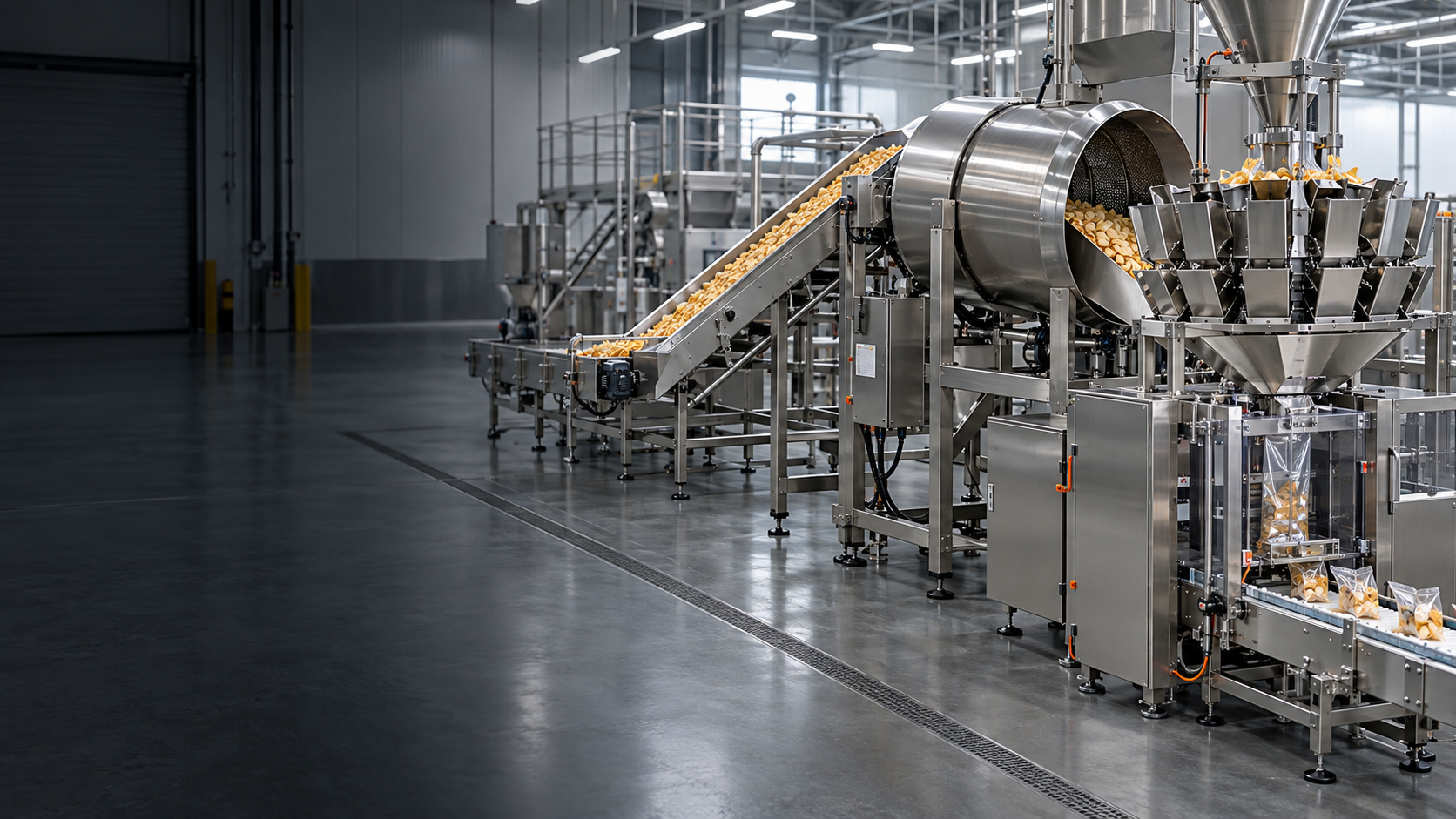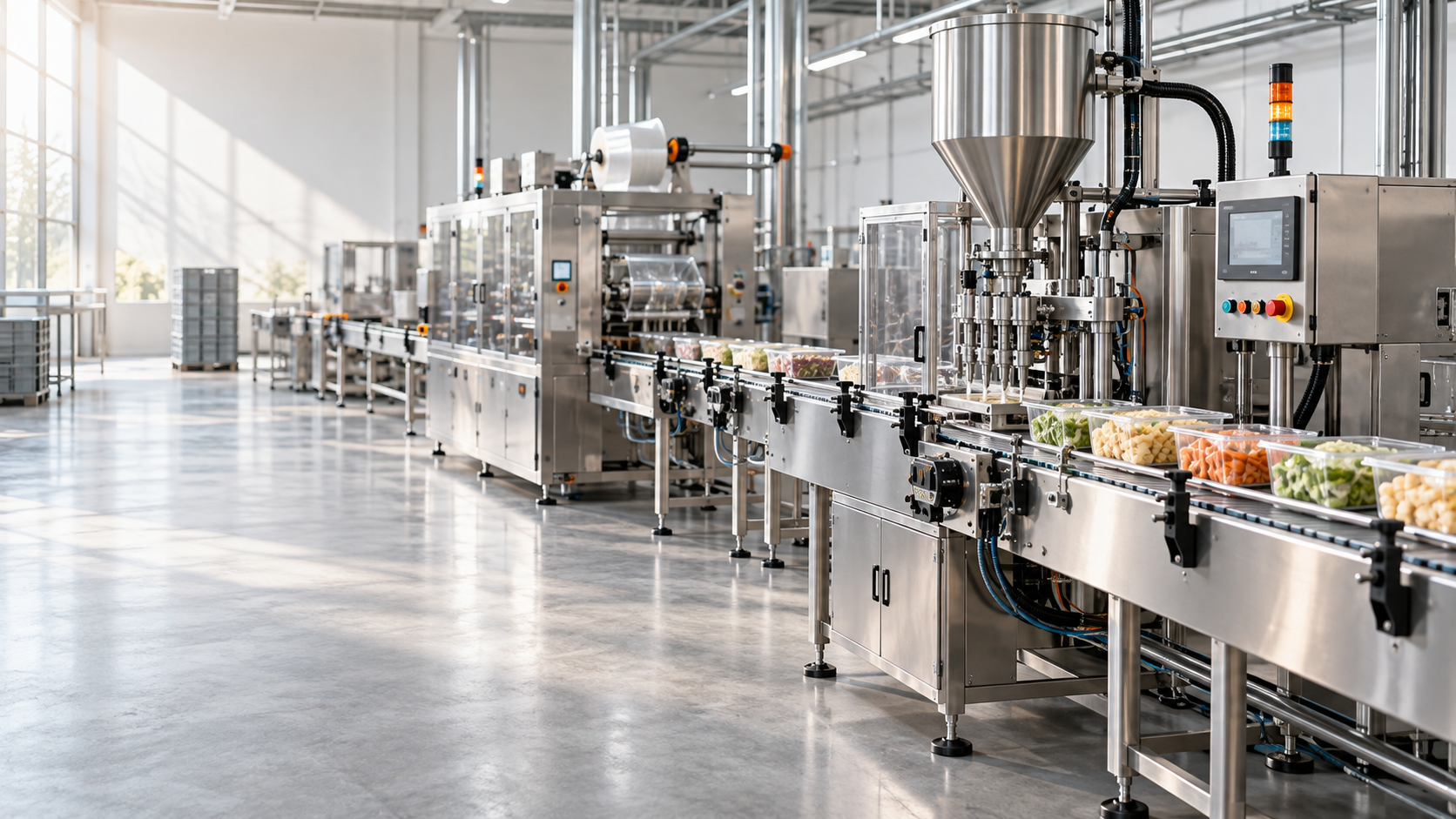
Illustrative stainless-steel food filling and packaging equipment in a production facility

FOOD EQUIPMENT PROJECT PLANNING

Food processing equipment, planned as a working line.

A clearer starting point for teams comparing processing and packaging equipment around the product, required output, site utilities and destination market.

01Product and format
02Output and utilities
03Market and handoff

FIRST PROJECT PATHS

Begin with the process the product actually needs.

We are building the initial release around a small set of application-led routes. Exact machine models and supplier materials are reviewed before they are quoted or published.

01

Snack processing to flexible pack

Plan the material path from preparation and thermal processing through seasoning, cooling, weighing and bag handling.

  • Product behavior after processing
  • Output and changeover expectations
  • Packaging and inspection interfaces
02

Fresh-cut produce and prepared food

Work through washing, cutting, dewatering, product handling and the packaging route without assuming a shelf-life outcome.

  • Material fragility and wash logic
  • Sanitation and water boundaries
  • Downstream packing conditions
03

Sauces, fillings and viscous foods

Map mixing, transfer, temperature control and filling around the actual viscosity, particles, container and cleaning requirements.

  • Recipe and material envelope
  • Heating, cooling and CIP needs
  • Filling and closure configuration
Illustrative snack processing, cooling, weighing and packaging equipment connected as a system
Illustrative system pathway. It is not a FoodMach installation or customer case.

LINE LOGIC BEFORE A CATALOG

The important question is where each machine hands off to the next.

A useful equipment discussion connects product behavior, process stages, utilities, controls and packaging. A list of standalone machines does not resolve those interfaces.

PROCESSWhat changes the product?
TRANSFERHow does it move between stages?
PACKWhat reaches the final pack?

A BETTER PROJECT BRIEF

Bring the variables that change the equipment answer.

The first conversation does not need a finished technical specification. It does need enough context to avoid comparing unlike options.

01

Product

Ingredients, viscosity, particle size, pack format and known sanitation considerations.

02

Output

Target units, kilograms or liters per hour, operating pattern and likely future changes.

03

Site

Available space, electrical standard, utilities, installation constraints and preferred controls language.

04

Market

Destination, documentation expectations, transport plan and the team responsible for commissioning.

HOW THE REVIEW WORKS

Keep the commercial conversation tied to technical evidence.

  1. 01
    Clarify the route

    Define product, target output, packaging format and destination-market constraints.

  2. 02
    Compare configurations

    Separate standard scope, options, utilities, interface requirements and exclusions.

  3. 03
    Check supporting documents

    Review model-specific data, commercial basis, packing assumptions and service boundaries.

  4. 04
    Prepare the next handoff

    Capture open items before quotation, inspection planning, shipping coordination or commissioning discussion.

CLEAR BY DESIGN

What this site does and does not represent.

IN SCOPE

Project discovery, equipment-path comparison, configuration questions and coordination of the next technical discussion.

NOT ASSUMED

Availability, lead time, compliance, warranty, service coverage or performance for an unnamed model or destination market.

START WITH THE PRODUCT

Bring the brief. We will help frame the next equipment question.

WhatsApp Linda linda@foodmachco.com

WhatsApp and email open a direct conversation. No automatic order or commercial commitment is created by this page.